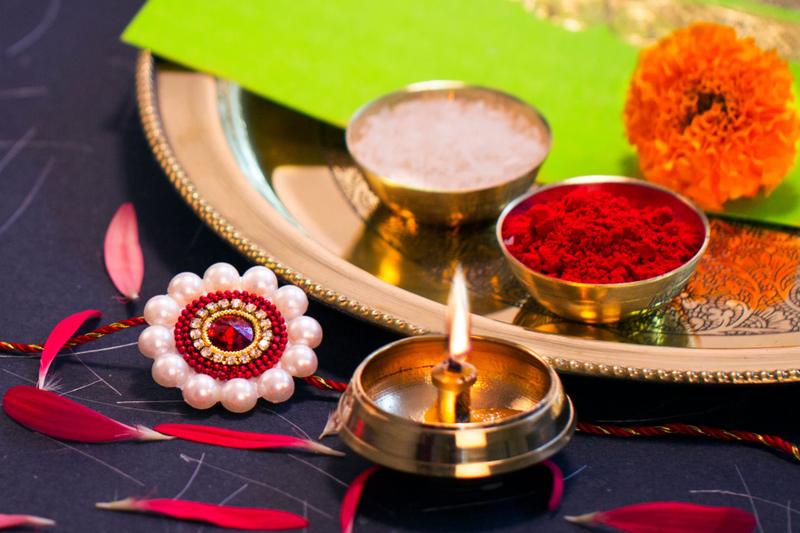
Raksha Bandhan or Rakhi is an annual festival that is celebrated on the Purnima of the Hindu lunisolar month of Shravan. This is a celebration of sibling’s love, and as such it has attained a highly secular stature among all Indians. It is a sacred thread that ties up the siblings' hearts with an immaculate bond of love and care. The festival of Rakhi salutes the notion of selfless adulation, amity, and heartfelt affection. It is a perfect way of defining the unbreakable bond of the brothers and sisters. With the historical and mythological essence of Raksha Bandhan, the festival is as significant for the siblings as for the traditions. Sisters tie rakhi threads on the hands of their brothers, and if they are not around their home, city, or state, then they can send online rakhi to India free to their brothers. Distance has never been an obstacle; thus, sisters send rakhi to India from foreign lands or another state or city to their brother along with a rakhi gift for sister. This is one of the many celebrations when the brothers and sisters shower each other with gifts, apart from the tying of the Rakhi thread and promising each other to cherish and protect forever. India is a diverse country that has varied customs and traditions. The festival of Rakhi is celebrated distinctly in its different parts or regions; the festival has its distinct name in every region, state, and community. Every community has its set of beliefs and traditions that make it a bit different from the others, but the essence of Rakhi remains the same. If you are curious, just like us, you are in the right place. Here we will explore the distinct names and the way the day is celebrated. Let’s have a look at a few of such spiritual names of the festival of Rakhi that will help us to understand it better.
While we are on our journey to know the distinct names of the day, ‘Raksha Bandhan,' let’s first know what the name of the day itself means. Many like to call it "Rakhi," as the sacred thread Rakhi is tied around the wrists of brothers, and this is not incorrect. But the actual name of the festival is ‘Raksha Bandhan.' The word “Raksha” means "to protect," and the word “Bandhan” means bond. Effectively, it means the “protection bond." On the day of “Raksha Bandhan," the brothers vow that they will protect their sisters from all evil and from difficult times, and in return, sisters pray for the long life of their brothers and wish them success in all their endeavors. The festival is celebrated on the day of Shravan Purnima and is celebrated by sisters tying a rakhi on the wrists of their brothers and applying a tilak on the foreheads of their brothers. The festival has its origin in the Bhavishya Puran. Where Sachi, the wife of Indra, tied a sacred thread to the wrist of Indra to protect him from the battle against the demon king Bali. From this, Rakhi gets the aspect of the bond of protection, and then there are plenty of stories proving the same.
Raksha Bandhan (North India)
Origin: Raksha Bandhan is rooted in the ancient Hindu tradition of the raksha sutra (protective thread), mentioned in Vedic rituals and later associated with stories from the Bhavishya Purana. Over time, it evolved into a celebration of the sibling bond.
Local Customs: Sisters perform aarti, apply tilak, tie the Rakhi on their brother's wrist, offer sweets, and pray for his well-being. Brothers, in return, give gifts and express their lifelong support and affection.
Historical Context: While the ritual of tying a protective thread has ancient origins, the modern celebration emphasizing brothers and sisters became more widespread through regional customs and cultural evolution.
How It's Celebrated Today: Families gather at home, exchange gifts, and celebrate with festive meals. For siblings living apart, Rakhis are often sent online, and celebrations take place through video calls.
Narali Purnima (Maharashtra and Goa)
Origin: This festival originated among fishing communities along India's western coast as a way of seeking blessings before venturing into the sea after the monsoon.
Local Customs: Devotees offer coconuts to the sea, pray to Lord Varuna (the sea deity), and begin the new fishing season. Raksha Bandhan is also celebrated within families on the same day.
Historical Context: Coastal communities have observed Narali Purnima for centuries, reflecting their dependence on the sea for livelihood and protection.
How It's Celebrated Today: Alongside traditional offerings, families exchange Rakhis, and many communities organize cultural events and processions.
Avani Avittam (Tamil Nadu, Kerala, Andhra Pradesh, Telangana)
Origin: Also known as Upakarma, this Vedic observance marks the annual renewal of the sacred thread (yajnopavita) worn by many Brahmin men.
Local Customs: Participants perform rituals, chant Vedic mantras, and replace their sacred thread, symbolizing spiritual renewal and a recommitment to learning.
Historical Context: The ceremony has been practiced for centuries and is deeply connected to Vedic study and religious discipline.
How It's Celebrated Today: While many Brahmin families continue to perform the traditional rituals, Raksha Bandhan is also celebrated in several households, especially in urban areas.
Gamha Purnima (Odisha)
Origin: Gamha Purnima has long been associated with agriculture and rural life, celebrating cattle and expressing gratitude for their role in farming.
Local Customs: Farmers decorate and worship cattle, while sisters tie Rakhis on their brothers' wrists. In many places, prayers are also offered to Lord Balabhadra.
Historical Context: The festival reflects Odisha's agrarian heritage and the importance of livestock in traditional farming communities.
How It's Celebrated Today: Along with traditional rituals, families gather for festive meals, exchange gifts, and celebrate sibling relationships.
Kajari Purnima (Madhya Pradesh, Chhattisgarh, and parts of Uttar Pradesh)
Origin: Kajari Purnima is linked to prayers for agricultural prosperity and family well-being during the monsoon season.
Local Customs: Women observe fasts, worship the Goddess, and pray for abundant harvests, prosperity, and the welfare of their families.
Historical Context: The festival developed in agrarian communities where seasonal harvests played a central role in daily life.
How It's Celebrated Today: Many families continue the traditional rituals while also celebrating Raksha Bandhan with siblings.
Pavitropana (Gujarat)
Origin: Pavitropana is a Shaivite festival dedicated to Lord Shiva and focuses on purification and devotion.
Local Customs: Devotees offer sacred cotton threads (pavitra) to Shiva Lingas, perform temple rituals, and seek divine blessings.
Historical Context: The festival has long been observed in Gujarat's Shiva temples and remains an important annual religious event.
How It's Celebrated Today: Temple visits, devotional singing, and Raksha Bandhan celebrations often take place on the same day.
Jhulan Purnima (West Bengal, Odisha, Assam)
Origin: Jhulan Purnima commemorates the divine love of Radha and Krishna and concludes the annual Jhulan Yatra festival.
Local Customs: Beautifully decorated swings are prepared for the idols of Radha and Krishna, accompanied by devotional songs, prayers, and temple celebrations.
Historical Context: The festival has been celebrated for centuries within the Vaishnava tradition and gained prominence through devotional movements.
How It's Celebrated Today: Temples organize elaborate decorations, cultural performances, and devotional gatherings, while many families also observe Raksha Bandhan at home.
Document observations during your research, such as:
- Different Rakhi designs sold in local markets, including traditional silk-thread Rakhis, beadwork styles, cartoon-themed Rakhis for children, eco-friendly seed Rakhis, and premium handcrafted pieces made with silver, stones, or fabric.
- Regional sweets prepared for the festival, such as laddoos, barfi, kaju katli, peda, sandesh, mishti doi, coconut-based sweets, and local specialties that vary by state and community.
- Variations in puja thali arrangements, including the use of diya, roli, rice, flowers, incense, sweets, and decorative plates made from brass, silver, or eco-friendly materials.
- Popular gift choices across different states, ranging from cash, clothing, and jewelry to books, gadgets, personalized hampers, dry fruits, and handmade items.
- Differences between urban and rural celebrations, such as the scale of family gatherings, the availability of market-made Rakhis, the role of temple rituals, and the continued use of traditional customs in villages.
- The influence of local language and customs on greetings, prayers, and ceremonial practices, which can make the same festival feel distinct from one region to another.
- Seasonal market activity, including temporary Rakhi stalls, festive crowds, and the sale of sweets, gift boxes, and decorative items in the days leading up to the festival.
- The growing presence of modern trends, such as online Rakhi delivery, virtual celebrations for siblings living apart, and the popularity of sustainable or personalized gifts.
Sources:
Academic Sources
For a historically balanced article, consider consulting the following scholarly works:
- P.V. Kane – History of Dharmaśāstra (multi-volume study of Hindu law, rituals, and customs).
- Diana L. Eck – India: A Sacred Geography.
- Vasudha Narayanan – Publications on Hindu rituals, festivals, and religious traditions.
- Patrick Olivelle – Translations and studies of the Dharmasūtras and related Sanskrit texts.
- David L. Haberman – Research on Krishna devotion and the Bhakti tradition.
- Anne Feldhaus – Studies on Maharashtra's religious culture and regional traditions.
- Stella Kramrisch – The Presence of Śiva.
Primary Scriptural References
- Atharva Veda (protective prayers and ritual use of sacred threads).
- Bhavishya Purana (the narrative of Indra and Indrani's protective thread).
- Bhagavata Purana (background for Krishna-related observances such as Jhulan Purnima).
- Gṛhya Sūtras and Dharmasūtras (ritual manuals for Vedic observances, including Upakarma).