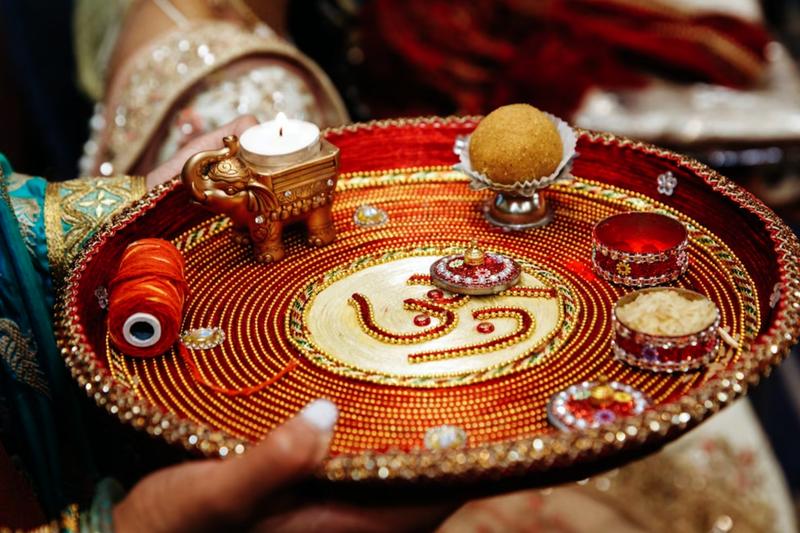
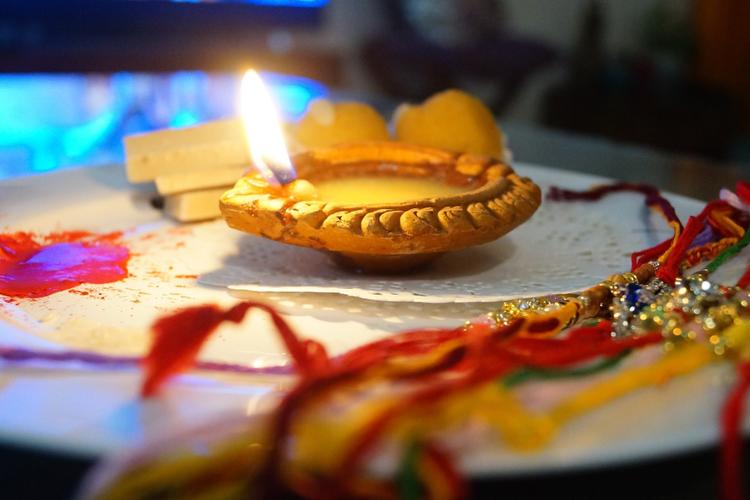
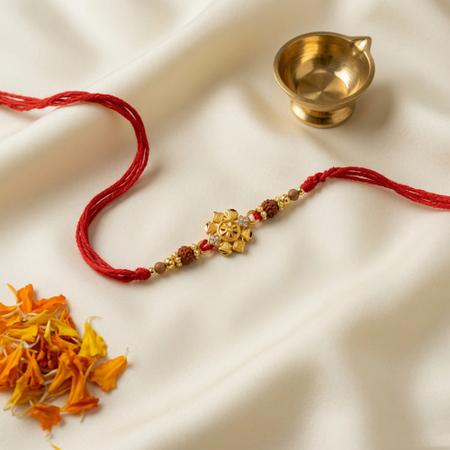
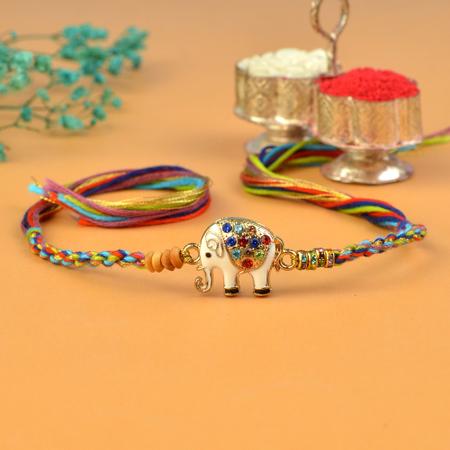
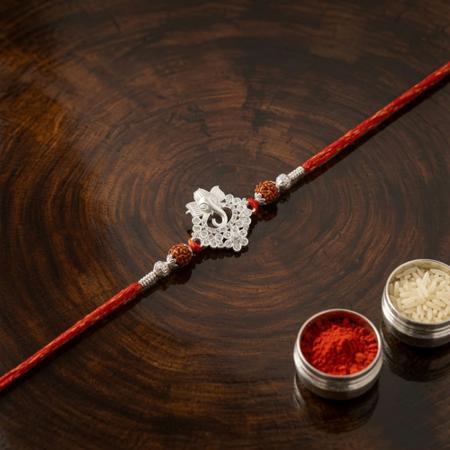
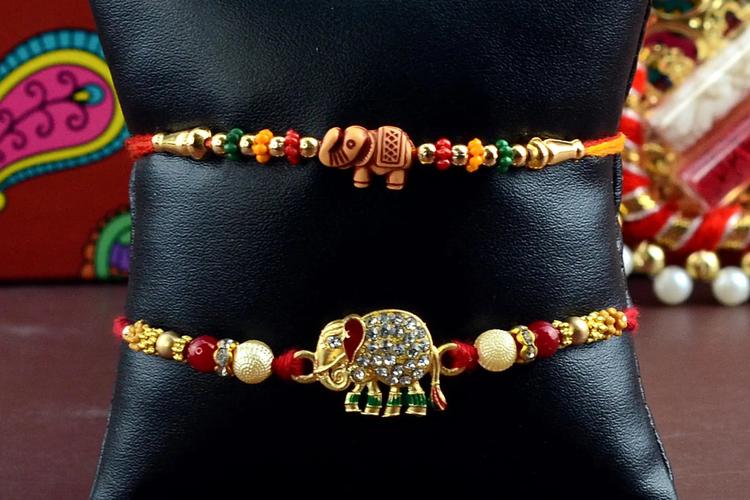
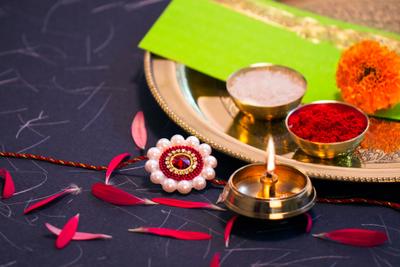
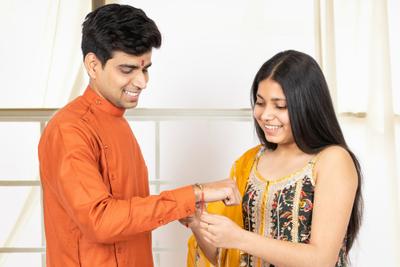
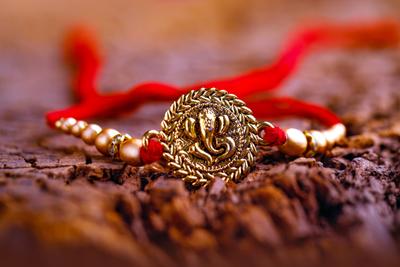
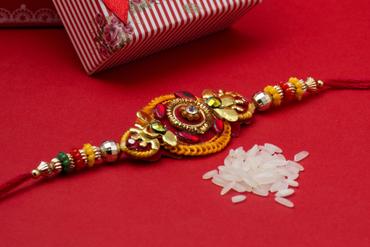
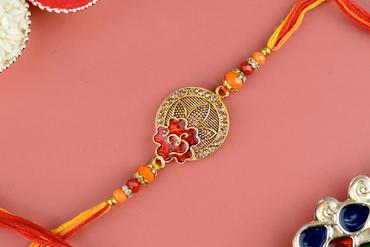
The festival of Raksha Bandhan tells the story of a decorated Rakhi of love, affection, care, and duty between a brother and a sister. When a girl ties a Rakhi on her brother’s wrist and applies a vermillion hue and rice tilak on his forehead, it is believed to be an expression of love between the two. In return, he vows to protect her, whatever the circumstances; this righteously depicts the essence of duty and immense care. In Andhra Pradesh, this festival of Rakhi is celebrated remarkably every year. This full moon day is called Shravani Purnima, Jandhyam Purnima, or Janai Purnima.
In the states of Karnataka and Andhra Pradesh, Jandhyam Purnima is mainly referred to as Janai Poornima. The name is derived from the Sanskrit language of Hindus, where "Jandhyam" is a sacred thread or Yagnopaveetham and the word Purnima means a full moon. On this full moon day of the month of Shravan, a thread-changing ceremony is held. Mainly Dwijis, or in common language, Brahmins, perform this sacred thread-changing ceremony. In the districts of Champawat, the famous Bagwal Fair is enjoyed by the excited crowd.
Rakhi Celebration as Shravani or Jandhyam Poornima
It is the tradition to sanctify the puja room while the threads are exchanged. For this custom, the performers perform a ritual bath in the lakes or their homes. Moreover, Maha Sankalpam is also recited during this Janeu Dharna ceremony. After reading the holy Gayatri Mantra, the new Janeu is worn. The old Janeu is referred to as the Jeerna Yagnopaveetha. According to the ritual, the Brahmins who didn’t get the opportunity to change their Janeu on this Shravan Purnima can do this on Bhadrapada Purnima. It is the day of Rakhi, which is the occasion of sanctity and harmony in Andhra Pradesh. Brahmins from all over the state take part in this ceremonial occasion. In addition to the bittersweet bond of a brother-sister relationship, it is also observed as a customary festival by several Hindus. This day of the full moon is not only a symbol of care and love for a family but also inspires a soul toward religion, purity, and spirituality in the sacred lands of Andhra Pradesh.
Rakhi Celebration as Pavitropana
A memorable cassette of sweet and sour memories plays in your head whenever you are busy with your work abroad but wish to send rakhi to India from Canada online. You surely crave the lovely festivities immersed in the recipe of love and care, spiced up with exciting presents and wrapped up with some finger-licking sweets. This exclusive full moon day, when a sister ties a bond of protection or Rakhi to her brother and she in return gets the gift of her choice, it ultimately brings you the warmth of your home sweet home. You will be surprised to know how this festival of Raksha Bandhan is much more than a serene bond of pure love in a brother-sister relationship. Gujaratis view this festival as a means of devotion toward Lord Shiva and call it Pavitropana. The basic features of this Pavitropana in the state of Gujarat will intrigue you for sure.
In the Indian state of Gujarat, the festival of Raksha Bandhan is celebrated as Pavitropana. As the people of Gujarat are, no doubt, the biggest devotees of Lord Shiva as per Hindu mythology, they worship God Shiva on this day. On the Purnima, they dutifully pray to Lord Shiva and seek his blessings. Shiv Lingas in almost every temple of Gujarat are offered water and worshipped through customary rituals. During the ceremony of Pavitropana, the Panchagavya is offered to the Shiv Lingas. These include a mixture of cow’s ghee, curd, milk, urine, and manure, as the cow is regarded as a sacred animal among Hindus. The Panchagavya is offered by soaking it in the twisted filaments of cotton and then fastening them around the Shiv Lingas. The sacred thread used during worship is known as Pavitras. In this age of development, not only is the online Rakhi to India innovative and advanced, but also the ancient Pavitras have a makeover. You can easily find silver, pearl, gold, or rich silk-made Pavitras to complete this ceremonial day of Pavitropana.
Rakhi Celebration As Narali Purnima
The Hindu luni-solar calendar brings to you the full moon day in the month of Shravan and, with it a traditional festival of joy, duty, and care. While sending Rakhi gifts to India from abroad to surprise your family, you surely do give a thought to the epic day of Raksha Bandhan. Raksha Bandhan traditions are incomparable and unique: a sister tying a sacred thread called a "rakhi" to her brother, a brother vowing to protect his sister; the swapping of presents and sweets, an arti platter, prayers, and not forgetting the application of vermillion-hued tilak on a brother’s forehead. Indian people sitting away from their loved ones can also cherish its festivities, as they can send rakhi with chocolates online to India or wherever they are, as Rakhi comes with high technology as a boon. Everything is so divine that we often forget about the diversity of its celebration. The festival of Raksha Bandhan is celebrated yet again on a whole new level in Maharashtra. In the coastal region of Maharashtra and Daman and Diu, this festival is celebrated as Narali Purnima, or coconut festival, customarily.
A coconut is offered to the sea on a full moon, as the name suggests; "Naral" in Narali Poornima means "coconut." It is believed that on this day of high tides, the coconut thrown into the sea pacifies the intense waves. Well, there are two prominent reasons for offering coconuts to the sea. Firstly, the coconut has always been a symbol of the Hindu religion in almost every festival. It is believed that each part of the coconut is beneficial to humankind. Secondly, devotees give credence to the concept of the coconut having three eyes like Lord Shiva. Thus, to please the sea god Varun in favor of the fishing season ahead, the auspicious coconut is offered. The entire celebration of the Narali Purnima is centered around the fishing communities. Before this day, the consumption of fish and any other fishing activity is abandoned, and on Raksha Bandhan, they celebrate the onset of their fishing season in a jubilant manner. The fisherfolk throw a coconut into the sea and worship the sea god for a better water trade. Not only do they have the above rituals, but the fishermen also renew their boats and ships on this festival. The holes are repaired, the old boats are painted, and the nets are either repaired or purchased by them.
The tempting traditional dishes like the Narali Bhaat and the Naralachi Karanjis are prepared. Prayers are offered to the sea god Varun on Raksha Bandhan. As the sea is the means of survival for these communities, they pray for a sea voyage full of prosperity and safety in the season ahead. Small diyas or lamps are lit along the waves and on the boat, and the prasad of coconut is distributed. So now we know how Narali Purnima is celebrated every year and even during Rakhi. The festival is not just about a bond of protection but also a way of livelihood for the fishermen's communities.
Rakhi Celebration As Kajari Purnima
The extra special bond of protection in the form of a rakhi is not just a plain thread but a sacred bond filled with sentiments. It is the emotions of love, care, protection, and duty that overall depict the hearty festival of Raksha Bandhan. This day of the full moon has always been of great importance in the hearts of every Indian. We all know that around us, this Rakhi was celebrated with gusto and devotion by almost every state of India but not forgotten uniquely. At one place, the day is celebrated for fisherfolk, and at the other, it is the day of farmers. If it is called the coconut festival in Maharashtra, then it is also referred to as Kajari Purnima in Madhya Pradesh. So let us illuminate the traditions of Central India, where Rakhi is celebrated as Kajari Purnima. The full moon day of the Shravan month is named Kajari Purnima in the areas of Madhya Pradesh, Chhattisgarh, Bihar, and parts of Uttar Pradesh. Kajari Purnima is the day of farmers. As per Indian traditional culture, this day is marked as a welcoming of the sowing season for our farmers generally residing in the areas of Madhya Pradesh, Chhattisgarh, and neighboring places. It is the end of the monsoon season, and thus it holds great importance for farmers.
According to one ritual, seven days before Kajari Purnima, on the Shravan Shukla Navami, women bring wheat from the fields in a leaf cup and then put it in a room devoid of sunlight and air. The area where the leaf cup is placed is washed with mud and cow dung. The floor is then decorated with rice rangolis of traditional patterns and designs, after which the cup is dutifully worshipped. This procedure is repeated every day till the final ritual is performed on Kajari Purnima. On this day, women take that leaf cup on their heads and immerse it into a water body or lake nearby. They also fast and pray for their son’s well-being. The intricate patterns of rice solutions that are decorated near the place of the leaf cup are called rangoli. It involves the patterns of household articles and day-to-day activities in common life; there can be either a child in a cradle or figures of houses. The Indian Goddess of prosperity, Goddess Bhagwati, is worshipped on the day of Kajari Purnima, and prayers of a good cropping season are recited. Barley and wheat are the two main crops that are sown at the start of the season by the farmers of Central India on this day. Whatever we say, believe, or follow, one thing is common, and that is the spirit of harmony and love behind the beautiful door of Raksha Bandhan, and that surely makes us united. So, for this Rakhi, no barrier can come between a brother and a sister. Even if you are not in India, the boon of online Rakhi will always make your brother feel special.
Rakhi Celebration as Gamha Purnima
Every holy festival of India has a unique story to narrate and a legend behind it, and so is the case of Rakhi or Raksha Bandhan. The sacred bond of Rakhi tied on a brother’s wrist by his sister, the application of the tilak, and a delightful exchange of gifts and sweets—this is the Rakhi that we know about the Raksha Bandhan festival. Even if you are far away from your country, the spirit of this festival never dies, as you can also send Rakhis to India to your beloved family. What we are oblivious to is the fascinating story of Rakhi's celebration as Gamha Purnima in the picturesque state of Orissa. The traditional beliefs behind this festival are so many that you would be truly captivated by the interesting details. Let us see how it is celebrated in Orissa. In Orissa, the day of Raksha Bandhan, or Gamha Purnima, is vividly remembered for agrarian culture. In the areas of Paralakhemundi, Nayagarh, and other parts of Orissa, this sacred day of the brother-sister bond is also celebrated as the birthday of the legend who is behind this customary agrarian heritage. It is the birthday of Lord Balarama, the elder brother of Lord Sri Krishna, and is celebrated by playing a traditional game of Gamha Diyan, or the Gamha Jump, by the people of Orissa.
In this Gamha Purnima, people never fail to remember the importance of animals, and they show their respect through a customary ritual. On this day, the domestic bullocks and cows are not only beautifully adorned and worshipped, but Rakhis are also tied to the horns of the bovine folk. Many Telugu families also adopted a similar tradition after this. In the rainy days of Shravan, Lord Krishna and Radha are believed to enjoy the season, starting from the Shukla Paksha Ekadashi and ending on Gamha Purnima. This beautiful festival of Rakhi is hence termed Jhulan Jatra when the idols of both are adorned on a swing, or jhulan. This festival is not only about a dutiful bond of protection and love between a brother and a sister but much more than that. The celebration of Gamha Purnima is for sending Rakhi gifts to India and its farmers, the spirit and power of the rich heritage of Indian agriculture. It is through the customs of this day that we come together to show respect to the wooden plows and bullocks that play a significant role in the lives of our farmers. It is the full moon day with the denouement of the Shravan month of the Hindu calendar that is celebrated as Raksha Bandhan, Rakhi Poornima, or Gamha Purnima.
The festivities of Raksha Bandhan in Orissa are accompanied by an action-packed game. The Gamha Diyan, or the Gamha jump, involves a platform, two poles, a bamboo stick, and several fruits. The platform, which is termed Gamha, is made of bricks, grass, and mud; it is filled with stones in the middle to ensure its strength; and it is made higher upwards and lower downwards. Its top is similar to a tower. Two poles are dug opposite each other, connected by a bamboo stick, and are not too far from the top. The luscious fruits are tied to the bamboo stick, and the people are asked to run from the bottom to the top to catch the fruits while jumping. The Gamha Purnima festival in the state of Orissa is very rich culturally and also in its diversity. The way in which Raksha Bandhan is celebrated in Orissa is quite spectacular and eye-catching.
Illustrative Regional Perspectives on Raksha Bandhan
In Maharashtra, Raksha Bandhan is described as a festival that blends family traditions with the coastal celebration of Narali Purnima. In many households, the day begins with prayers, after which sisters perform the Rakhi ceremony by applying tilak, tying the sacred thread, and offering sweets. Families often prepare festive meals featuring regional delicacies such as puran poli, shrikhand, and coconut-based dishes. Younger family members who live in other cities or abroad frequently join the celebration through video calls, while gifts are ordered online so they arrive before the festival.
An illustrative perspective from Odisha highlights how Raksha Bandhan coincides with Gamha Purnima in many parts of the state. Along with the Rakhi ceremony between siblings, some rural families continue traditions associated with agriculture and cattle worship, reflecting the state's agrarian heritage. Family gatherings remain central to the celebration, with homemade sweets and shared meals strengthening family bonds. In urban areas, the emphasis has gradually shifted toward exchanging thoughtful gifts while preserving the traditional Rakhi rituals.
Someone from Gujarat explained that Raksha Bandhan is often observed alongside Pavitropana, a festival dedicated to Lord Shiva. Families may visit temples before gathering at home for the Rakhi ceremony. Sisters tie Rakhi, perform aarti, and pray for their brothers' well-being, while brothers offer gifts as a token of love and appreciation. Many younger families are increasingly choosing handcrafted or eco-friendly Rakhis and combining traditional rituals with modern celebrations such as virtual family gatherings and digital gift vouchers.
Bihar reflects a celebration deeply rooted in family values. Siblings usually gather at their ancestral home whenever possible, where sisters perform the Rakhi ritual and elders bless the family. Traditional sweets such as thekua, laddoo, and khaja are commonly prepared or purchased for the occasion. Although migration for education and employment means many siblings now live apart, families continue to celebrate by sending Rakhis and gifts across cities and countries, ensuring that the tradition remains meaningful despite the distance.
An illustrative perspective from Rajasthan emphasizes the continued importance of the Lumba Rakhi tradition in many Marwari families, where sisters also tie a decorative Rakhi to their sisters-in-law as a symbol of prosperity and family unity. The celebration often includes elaborate family meals, traditional attire, and gatherings with extended relatives. While younger generations may simplify some rituals, many families continue to preserve customs passed down through earlier generations, viewing Raksha Bandhan as an occasion to strengthen relationships across the entire family rather than only between brothers and sisters.
Across these illustrative examples, a common pattern emerges. Regardless of the region, Raksha Bandhan continues to symbolize affection, responsibility, and lifelong family bonds. Modern lifestyles have introduced online Rakhi delivery, digital gifting, and virtual celebrations, yet the core traditions of tying Rakhi, offering prayers, sharing sweets, and spending time with loved ones remain at the heart of the festival throughout India.
Why Raksha Bandhan Traditions Differ Across India
Raksha Bandhan is celebrated throughout India, but its customs vary because each region has developed its own cultural, religious, historical, and economic identity over centuries. While the central ritual of a sister tying a Rakhi on her brother's wrist remains widely recognized, local festivals that coincide with the full moon (Purnima) of the Hindu month of Shravana have shaped distinct regional practices. Communities often integrated Raksha Bandhan with existing religious observances, agricultural cycles, and local occupations, resulting in diverse celebrations that reflect regional heritage rather than a single uniform tradition.
Religious Influences
Religious traditions have been one of the strongest influences on regional celebrations. In Gujarat, Raksha Bandhan coincides with Pavitropana, an important Shaivite festival during which devotees offer sacred cotton threads (pavitras) to Lord Shiva, leading many families to combine temple worship with Rakhi rituals. In Tamil Nadu, Kerala, parts of Andhra Pradesh, and Karnataka, the same day is observed as Avani Avittam (Upakarma), when many Brahmin communities ceremonially renew their sacred thread and recommit themselves to Vedic learning. In Odisha, Gamha Purnima links the festival with agricultural life and the worship of cattle, while in Maharashtra and Goa, Narali Purnima celebrates the sea, with fishing communities offering coconuts to the ocean before beginning a new fishing season after the monsoon.
Influence of Local Economies
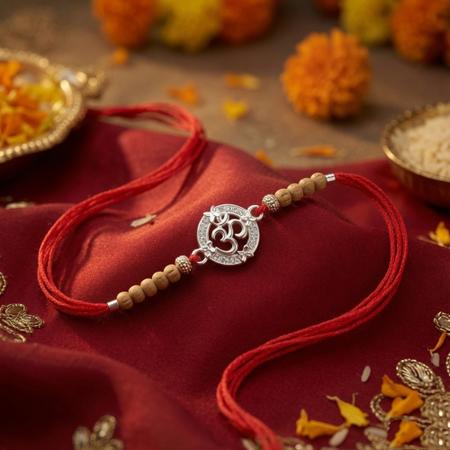
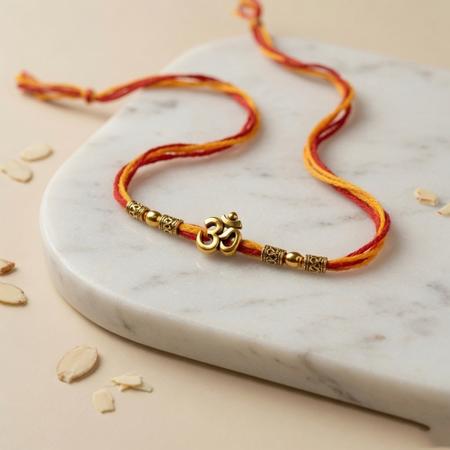
Local economies have also shaped how Raksha Bandhan is observed. Coastal states such as Maharashtra developed rituals centered on the sea because fishing has long been a primary livelihood. Agricultural regions like Odisha and Bihar incorporated harvest-related customs and prayers for livestock, reflecting the dependence of rural communities on farming. In Rajasthan, prosperous merchant families popularized Lumba Rakhi, tied to sisters-in-law as well as brothers, symbolizing prosperity, family unity, and the importance of joint-family business households. Regions known for handicrafts, textiles, and jewelry also developed distinctive Rakhi styles using locally available materials such as silk, zari, beads, pearls, sandalwood, and rudraksha.
Historical Development
Historical developments further contributed to regional diversity. As kingdoms, trade routes, and cultural exchanges expanded across the Indian subcontinent, local communities adapted Raksha Bandhan to fit their own traditions while preserving its core message of protection and affection. During the early twentieth century, Rabindranath Tagore encouraged the tying of Rakhi as a symbol of communal harmony during the movement against the 1905 Partition of Bengal, giving the festival a broader social meaning beyond family relationships. Over time, the festival also expanded to include cousins, sisters-in-law, close friends, and symbolic bonds between communities.
Modern Changes
Modern lifestyles continue to reshape Raksha Bandhan without replacing its essential values. Urbanization and migration mean many siblings now celebrate across different cities or countries using courier services, online gift platforms, and video calls. Families increasingly choose eco-friendly Rakhis, personalized gifts, and digital gift cards while continuing traditional rituals such as applying tilak, performing aarti, tying the Rakhi, and sharing sweets. In many households, celebrations have become more inclusive, recognizing sisters, cousins, and lifelong friends alongside brothers, reflecting changing family structures and contemporary ideas of mutual care and respect.
These regional differences demonstrate how Indian festivals evolve by adapting to local geography, occupations, religious practices, and social change while preserving their central cultural significance. Rather than representing separate festivals, the many forms of Raksha Bandhan illustrate the diversity of India's cultural traditions and the shared values of love, protection, gratitude, and family unity that connect them.
References and Further Reading
The cultural and historical context of Raksha Bandhan is supported by a range of authoritative government publications, academic research, and classical Hindu texts. For state-specific customs, official tourism and cultural departments are valuable sources. Maharashtra Tourism documents the traditions of Narali Purnima and the coastal Koli communities, while Odisha Tourism and the Department of Odia Language, Literature, and Culture explain the significance of Gamha Purnima and its links to the state's agricultural heritage. Gujarat Tourism provides information on Pavitropana and Shaivite observances, Rajasthan Tourism discusses Lumba Rakhi and Marwari family traditions, and West Bengal Tourism highlights the association of Raksha Bandhan with Jhulan Yatra. Information on Upakarma (Avani Avittam) can be found through the Central Sanskrit University and other Sanskrit research institutions that document Vedic rituals and sacred-thread ceremonies.
Scholarly interpretations of Raksha Bandhan and Hindu traditions are found in the works of respected historians and religious scholars, including A. L. Basham, Romila Thapar, Diana L. Eck, Kapila Vatsyayan, Vasudha Narayanan, Gavin Flood, and David Kinsley. Important reference books include The Wonder That Was India by A. L. Basham, India: A Sacred Geography by Diana L. Eck, The Penguin History of Early India by Romila Thapar, The Hindu Temple by Stella Kramrisch, and Religion in India by Fred W. Clothey. These works examine the historical development of Hindu festivals, regional diversity, and the cultural symbolism of rituals.