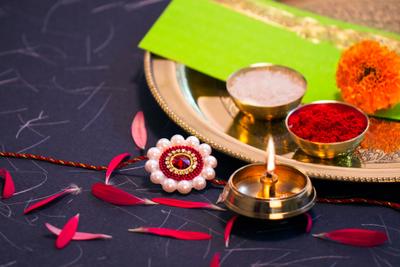
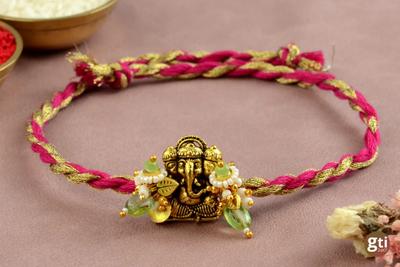
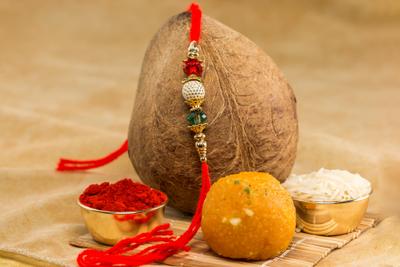
Rakshabandhan is a special occasion that celebrates love and the emotional bond between siblings. It is primarily celebrated with the most extraordinary splendor in India in the Hindu month of Shravana every year. Raksha Bandhan marks the last day of the Hindu lunar calendar month Shravana. This is typically observed following the Gregorian calendar in August. On this day, sisters tie the sacred thread ‘Rakhi’ on the wrists of their brothers and pray for their well-being. Rakhi thread implies the bond of protection. The brothers take up the solemn vow to protect their sisters from life's evil forces. In present times, many Indians have settled abroad for myriad reasons. Sitting in a foreign land, they often miss out on celebrations. Though they are far from their homeland and loved ones, they can still celebrate Raksha Bandhan differently. We understand the needs and make sure that distance does not dampen Raksha Bandhan celebrations.
How Rakhi dates are calculated
The Raksha Bandhan dates are based on the Hindu luni-solar calendar, which is often decided by recognized Hindu calendar authorities such as Drik Panchang, mPanchang, and Panchang.org. It is primarily celebrated on the Hindu month of Shravana every year, and it marks the last day of the Hindu lunar calendar month Shravana. Raksha Bandhan is observed annually on the Purnima (Full Moon) Tithi of the Hindu month of Shravana (Sawan). Since the festival follows the Hindu lunisolar calendar, its Gregorian date changes each year based on astronomical calculations of the Sun, Moon, and Tithi. The festival date and the auspicious time (Muhurat) are determined using the Hindu Panchang, with preference given to performing the Rakhi ceremony during Aparahna (late afternoon) or Pradosh Kaal when applicable, while Bhadra (Vishti Karana) is avoided for the Rakhi-tying ritual. This is typically observed following the Gregorian calendar in August.
The calculation follows several steps:
1. Identify the lunar month
- Raksha Bandhan falls during the Shravana (Sawan) month in most Hindu calendars.
- The festival is observed on the Purnima Tithi (Full Moon lunar day) of this month.
2. Determine the Purnima Tithi
- A Tithi is a lunar day based on the angular distance between the Sun and Moon, not a midnight-to-midnight civil day.
- Since a Tithi can begin or end at any time of day or night, the Gregorian date of Raksha Bandhan changes every year.
3. Apply the festival observance rules
Traditional Panchangs do not simply choose the day on which Purnima occurs. They also consider:
- Whether Purnima prevails during Aparahna (late afternoon), the preferred period for the Rakhi ceremony.
- If Aparahna is unavailable, Pradosh Kaal (early evening) may be used.
- Bhadra (Vishti Karana) must be avoided because Hindu scriptures regard it as inauspicious for tying Rakhi.
Why Rakhi dates sometimes differ
Occasionally, people see different Raksha Bandhan dates published by various calendars. This usually happens because:
Purnima Tithi spans two Gregorian dates.
- Different traditions (such as Amanta and Purnimanta calendar systems) may present months differently, although Raksha Bandhan generally aligns.
- Panchang authorities strictly apply scriptural rules regarding Aparahna, Pradosh, and Bhadra, which may shift the observance to the following day.
Hindu calendar authorities commonly referenced
The following sources are widely consulted for determining Raksha Bandhan dates and timings:
|
Authority
|
Role
|
|
Drik Panchang
|
Astronomically calculated Panchang providing festival dates and city-specific muhurats. (Drik Panchang)
|
|
Traditional Panchang publishers
|
Publish annual regional Hindu almanacs based on established astronomical calculations and scriptural rules.
|
|
Dharma Sindhu
|
Classical authority is frequently cited for festival observance rules, including Raksha Bandhan timing. (ICAS)
|
|
Vratraj>
|
Traditional text prescribing that Rakhi should not be tied during Bhadra. (Drik Panchang)
|
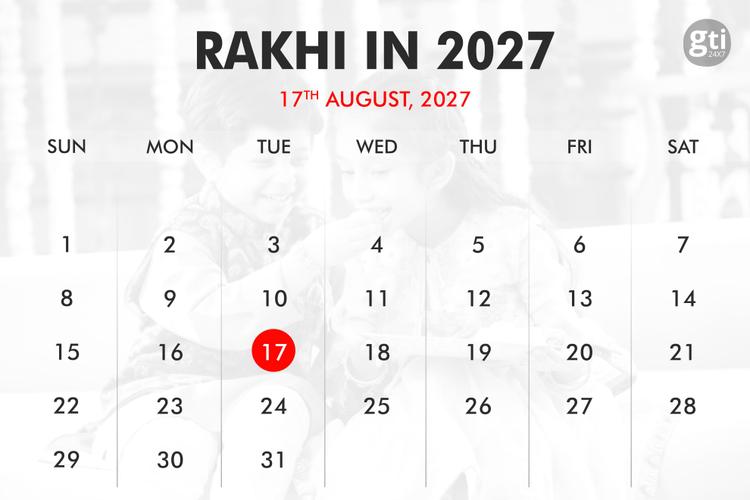
When is Rakhi in 2027?
Rakhi in 2027 is on the 17th of August, Tuesday.
The tying of this sacrosanct protection thread is not limited to brothers only. Girls also tie Rakhi threads to their sisters-in-law, commonly known as Lumbas. What makes the day more exciting is the exchange of Rakhi gifts. To facilitate the desires of these offshore candidates in sending Rakhi to India, many online gifting portals have been ushered into service. Now, no matter in which corner of the world you are dwelling, with just a few clicks of the mouse, you can send the most cherished Rakhi gifts to India to your beloved sibling.
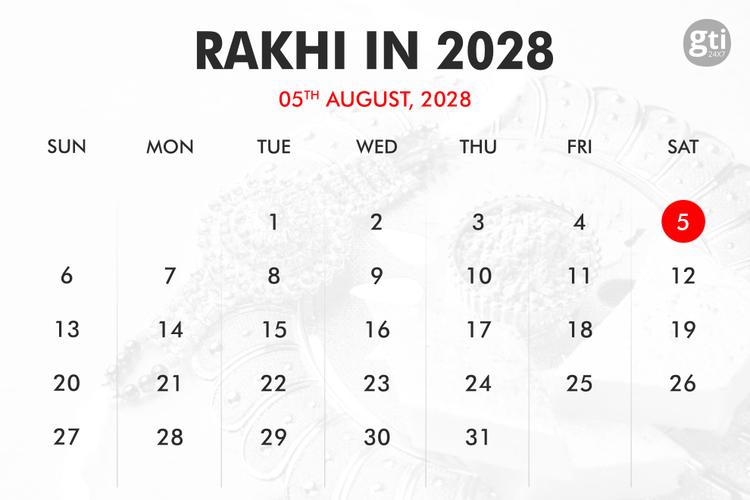
When is Rakhi in 2028?
Rakhi in 2028 is on the 5th of August, Saturday.
The preparations for the celebration start much before the revered occasion. Women start buying colorful, fancy rakhis to delight their brothers. All the shops and stores are decorated with captivating rakhis, sweets, gifts, and other ceremonial materials. On an auspicious day, people adorn new traditional and ethnic attire. The female members of the family arrange the sacred rakhi thali, as the sister binds the rakhi and performs the aarti of her brother. In return, the brother pampers his sister with love, blessings, and a delightful Raksha Bandhan gift for her. This graceful custom is followed by cousins, relatives, and neighbors too. With religious fervor, Raksha Bandhan also unites our extended family. It builds a stronger bond among the family members. On this day, several mouth-watering dishes are also prepared and enjoyed together over a family lunch.
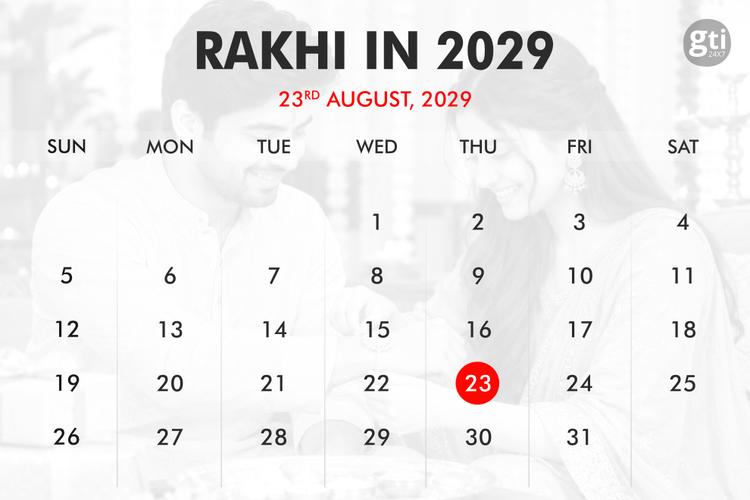
When is Rakhi in 2029?
Rakhi in 2029 is on the 23rd of August, Thursday.
Most of the festivities of Rakhi revolve around the custom of gift-giving carried out on most auspicious occasions. Both brother and sister get very busy trying to choose the perfect gift for the other one in advance. But sometimes the siblings may not be able to meet due to the geographical distance that lies between them. Even if you are in this situation, you need not worry, as you can easily send rakhi online to other countries and regions.
Historical Significance
The historical significance of Raksha Bandhan lies in its enduring role as a symbol of protection, trust, and familial responsibility. While the festival's roots are closely tied to Hindu traditions and the observance of Shravana Purnima, its meaning has evolved over centuries through religious narratives, regional customs, and historical events. Ancient Hindu scriptures such as the Bhavishya Purana recount the story of Indra's wife, Indrani (Shachi), tying a sacred thread around Indra's wrist before his battle with the demons, symbolizing divine protection and marking one of the earliest references to a protective thread (raksha sutra). Over time, this ritual expanded beyond warfare and came to represent blessings, well-being, and mutual care among family members.
During medieval and later Indian history, Raksha Bandhan also acquired social and cultural significance beyond the sibling relationship. Historical accounts and folklore describe queens and noblewomen sending sacred threads to neighboring rulers as a gesture of goodwill, alliance, or a plea for protection, reinforcing the Rakhi as a symbol of honor and mutual respect. Although some popular stories—such as the legend of Rani Karnavati and Emperor Humayun—remain debated by historians due to limited contemporary evidence, they continue to reflect the festival's enduring association with trust, unity, and the moral duty to protect one another. There are more such stories that are related to Raksha Bandhan, and for more information, you can check our article. Today, Raksha Bandhan celebrates not only the bond between brothers and sisters but also the broader values of love, responsibility, and social harmony.
Regional Variations of Raksha Bandhan
Raksha Bandhan is celebrated across India in diverse ways, reflecting the country's rich cultural and regional traditions. In North India, the festival primarily honors the bond between brothers and sisters, with sisters tying a Rakhi around their brothers' wrists and praying for their well-being, while brothers promise lifelong protection. In Maharashtra and Goa, the same day is celebrated as Narali Purnima, when fishing communities offer coconuts to Lord Varuna, the sea god, seeking safe voyages and a prosperous fishing season. In Gujarat, devotees observe Pavitropana, dedicating sacred threads to Lord Shiva, while in Odisha, Gamha Purnima combines Raksha Bandhan with agricultural rituals and the worship of Lord Balabhadra.
In southern and eastern India, Shravana Purnima is marked by distinct customs. In Tamil Nadu, Kerala, Andhra Pradesh, Karnataka, and parts of Odisha, many Brahmins observe Avani Avittam (Upakarma) by changing their sacred thread and recommitting themselves to Vedic studies. In Rajasthan, the festival includes traditions such as Lumba Rakhi, where married sisters tie decorative Rakhis to their sisters-in-law's bangles to honor the entire family. In West Bengal and several other states, Raksha Bandhan has also become a celebration of friendship, social harmony, and community unity, extending the festival's message of protection and mutual respect beyond siblings.
Unique Insights from Years of Serving Rakhi Customers
Having helped families celebrate Raksha Bandhan for years, we've observed how the festival has evolved while its emotional significance remains unchanged. Every Rakhi season brings unique gifting preferences, delivery patterns, and heartfelt stories that reflect how siblings continue to stay connected despite geographical distances.
Gifting Trends That Continue to Evolve
Modern Rakhi celebrations go far beyond the traditional sacred thread. While classic Mauli, Rudraksha, and Kundan Rakhis remain timeless favorites, customers increasingly choose curated gift combinations that create a complete festive experience. Personalized gifts, premium chocolates, gourmet hampers, dry fruits, wellness baskets, gadgets, and gift cards have become popular additions to Rakhi orders.
Another noticeable trend is the growing demand for family gifting. Instead of sending a Rakhi alone, many customers include gifts for sisters-in-law, parents, children, or the entire household, making Raksha Bandhan a celebration for the whole family. Personalized keepsakes, photo gifts, engraved accessories, and customized hampers are especially popular among younger buyers looking to make their gifts more meaningful. For a closer look at the latest gifting preferences, explore our article on Rakhi gifting trends, where we highlight the most popular Rakhi styles, gift combinations, and emerging customer favorites.
Shipping Patterns We See Every Rakhi Season
One of the biggest lessons from years of delivering Rakhi gifts is that planning ahead makes a significant difference. International customers often place their orders weeks before Raksha Bandhan to ensure timely delivery, especially when sending gifts during the festive rush.
Customers also increasingly prefer complete gifting solutions. Rather than placing separate orders for Rakhi, sweets, flowers, and cakes, they choose curated combinations that are packed and delivered together. This not only simplifies gifting but also ensures the recipient enjoys a coordinated festive experience.
For customers living overseas, local delivery within India offers another important advantage. Since gifts are delivered domestically after the order is placed online, siblings can avoid the uncertainties of international postal delays, customs clearance, and courier restrictions that often accompany shipping physical parcels across borders.
How NRIs Celebrate Raksha Bandhan Today
Our experience serving NRIs has shown that Raksha Bandhan remains one of the most emotionally significant festivals for families living apart. Many brothers and sisters begin planning their celebrations well in advance, coordinating video calls so the Rakhi ceremony can still be performed virtually when they cannot meet in person.
We've also noticed that customers frequently include handwritten messages, photographs, or personalized gifts to recreate the warmth of celebrating together. Families living in the United States, Canada, the United Kingdom, Australia, Singapore, the UAE, and other countries often schedule online family gatherings and exchange digital greetings to ensure distance does not diminish the occasion.
Celebrating Traditions While Embracing Modern Convenience
Although gifting preferences continue to evolve, the heart of Raksha Bandhan remains unchanged—a celebration of love, gratitude, and lifelong support between siblings. Whether it's a traditional Rakhi with sweets, a personalized gift hamper, or a carefully curated surprise delivered across India, today's celebrations beautifully combine cherished customs with modern convenience, allowing families around the world to stay connected regardless of distance.
FAQs
Why do we only tie the thread on the brother?
A: While the traditional script focuses on the sister blessing the brother, modern practitioners often ignore this restriction. Many sisters now have their brothers tie a thread on them as well or exchange gifts and vows of mutual support. The festival's meaning is what the siblings make of it; in many families, it is now celebrated as a bond between equals.
What is the significance of the Rakhi thread?
A: The Rakhi thread represents love, protection, blessings, and the lifelong bond between siblings. It serves as a reminder of mutual care, responsibility, and family unity.
For more queries, check out our article on FAQs.
Sources and References for Raksha Bandhan Dates
The observance rules are followed by leading Panchang authorities and are supported by classical Hindu texts, which are discussed below:
Recognized Calendar Authorities
- Drik Panchang – One of the most widely referenced astronomical Hindu calendars, providing city-specific Raksha Bandhan dates, Muhurats, Purnima Tithi timings, and Bhadra periods based on precise astronomical calculations. It explains that Raksha Bandhan is celebrated on Shravana Purnima, the preferred time for tying Rakhi is Aparahna, and the ritual should not be performed during Bhadra.
- Traditional Hindu Panchangs – Regional almanacs prepared by learned Panchang makers using the principles of Jyotisha (Hindu astronomy and astrology) to calculate Tithi, Nakshatra, Yoga, Karana, and festival observances.
- Classical Dharma Texts – Panchang authorities frequently cite traditional works such as the Vratraj and Dharma Sindhu, which prescribe that Rakhi should not be tied during Bhadra (Vishti Karana), reinforcing long-established ritual practices.
Supporting References
- Drik Panchang. Raksha Bandhan Date, Muhurat & Panchang (city-wise annual calculations based on astronomical data).
- Traditional Hindu Panchang (regional almanacs published annually by recognized Panchang authorities).
- Dharma Sindhu (classical Sanskrit digest of Hindu rituals and festival observances).
- Vratraj (traditional text prescribing festival rituals, including the avoidance of Bhadra during Raksha Bandhan).
Nayanika Dey
With over 4 years of experience, Nayanika Dey serves as the Content Head at GiftstoIndia24x7. Specializing in creating insightful articles that help readers learn about gifting ideas, she is passionate about crafting content that inspires thoughtful gifting by combining industry expertise with a deep understanding.